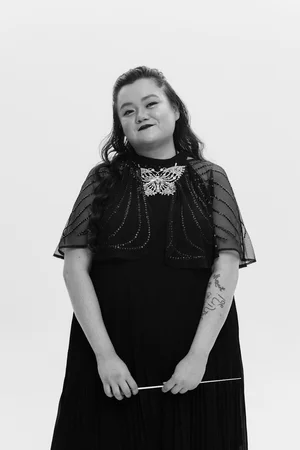
Inside the Control Room: What I Learned Observing the Colorado Symphony Record a World Premiere
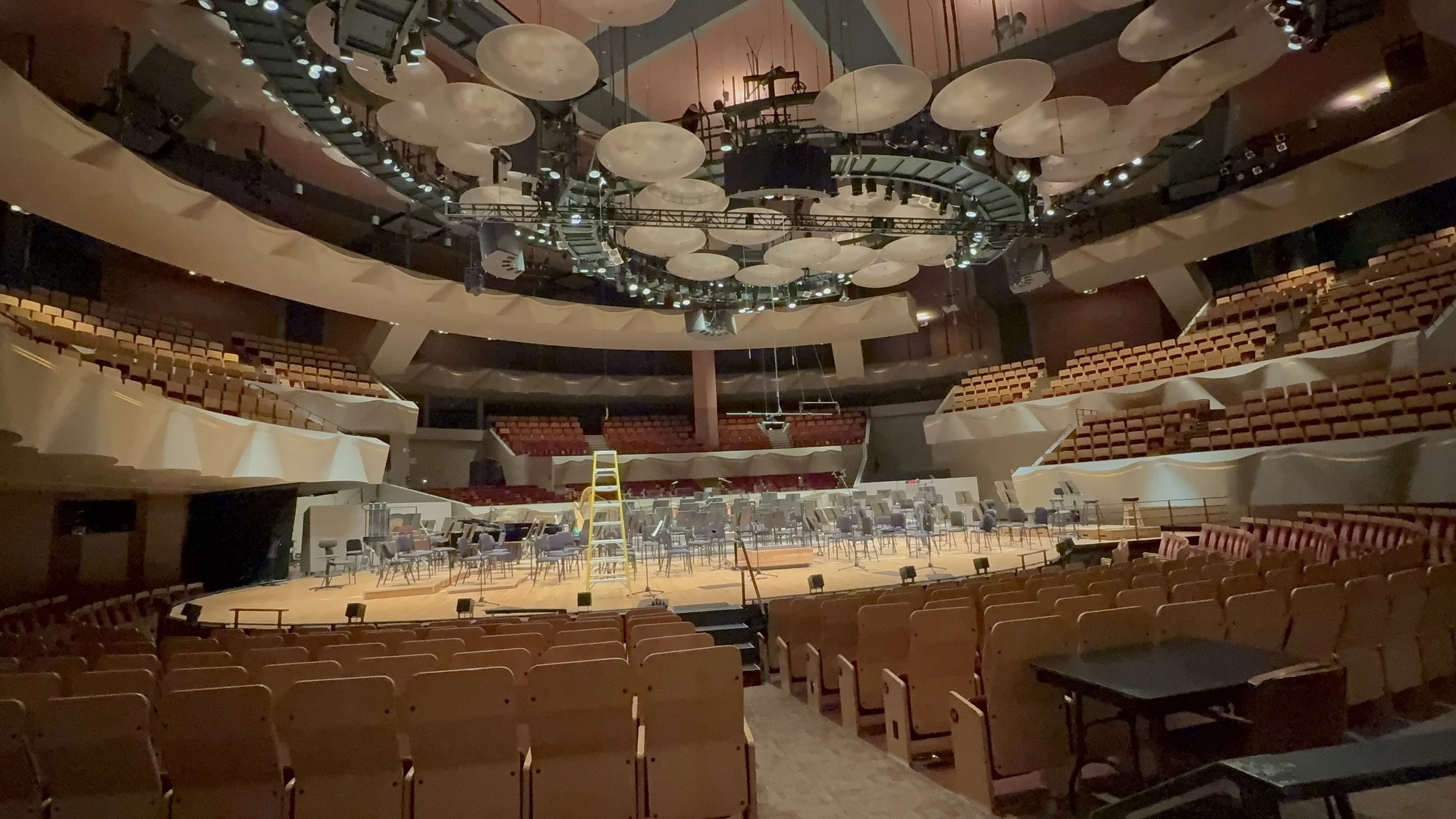
Last month, I had the rare opportunity to observe and assist with part of the recording process for the Colorado Symphony during a program that featured Verdi’s La Forza del Destino Overture, the world premiere of Christopher Theofanidis’s Gemini Sun: Concerto for Violin and Percussion, and selections from Prokofiev’s Romeo and Juliet.
I was invited by a friend of mine, Christian, who works as an audio engineer, and the experience gave me a perspective I do not think I could have gained from the audience alone. I have spent years studying orchestral scores and thinking deeply about interpretation as a conductor, but sitting in the control room and following the score in a recording context changed the way I listened. It made me think not only about performance, but about what it means to preserve a performance. It sharpened my awareness of structure, balance, timing, and the strange and fascinating relationship between the live event and the recorded document that remains after it.
What struck me most is that recording an orchestra is not simply a matter of capturing what happened in the hall. It is an art of attention. It asks everyone involved to hear differently.
And like many meaningful artistic experiences, it was not only about the music itself. It was also about the people around it: the collaborators, the conversations, the surprising backstage moments, and the new connections that can form when a group of artists briefly share the same orbit.
Hearing Like a Conductor in a Control Room
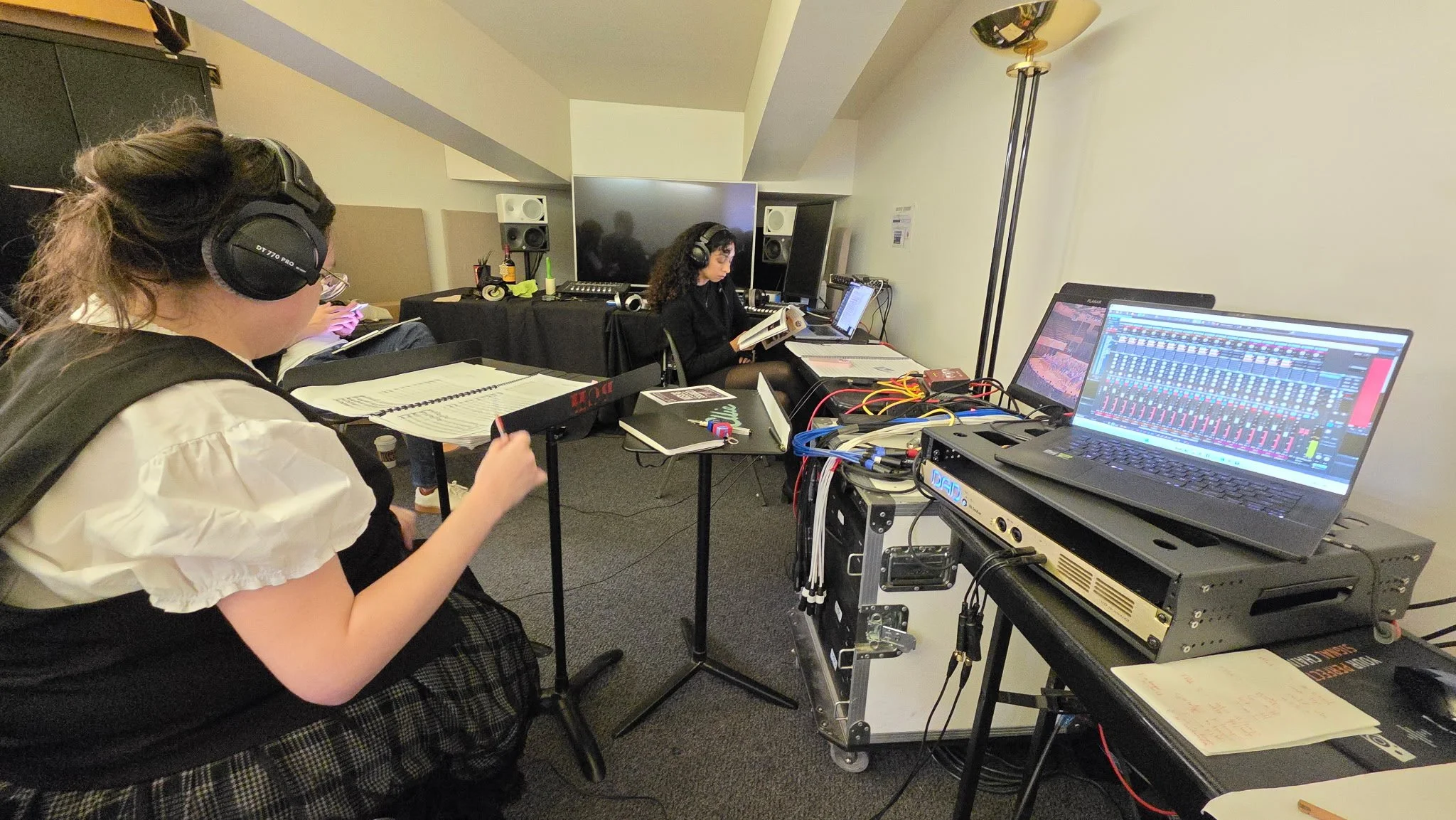
One of the most fascinating parts of the experience was being able to follow the score in real time while listening with a recording mindset. As a conductor, score study trains you to hear vertically and horizontally at once. You are listening for harmony, texture, line, pacing, articulation, orchestral color, and formal architecture all at the same time. In a recording environment, that kind of listening becomes especially useful because the question is no longer only, “Is this musically compelling?” It also becomes, “Will this section cut cleanly? Was that entrance stable enough? Did the energy carry through the phrase? Is this a moment that should be kept, patched, or redone?”
That shift was exhilarating.
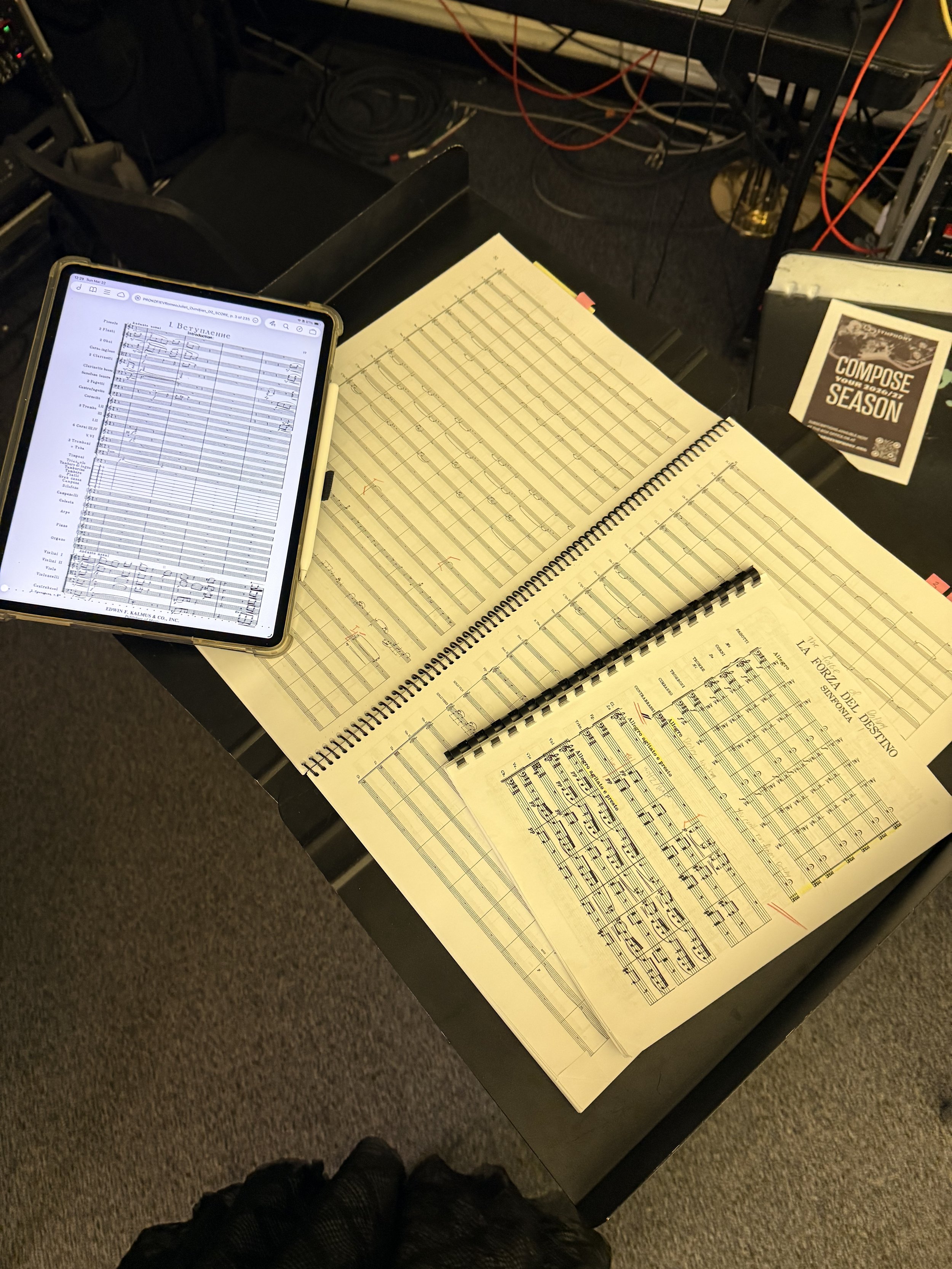
Scores Ready!
It reminded me that conductors are trained not only to shape performance, but also to recognize where things live inside a score: where an inner line matters, where a balance issue can obscure a structural point, where a transition needs continuity, where a phrase has to breathe naturally or the entire section loses its logic. In the control room, those instincts become highly practical. I found myself marking spots that seemed like they might need another take or would require especially careful editing in post.
There is something almost surgical about that kind of listening, but it is not cold. If anything, it made me admire the living body of the orchestra even more. You hear how much discipline it takes to produce something that feels inevitable. You hear how many tiny decisions support a phrase that, to an audience, simply feels beautiful and complete.
The Difference Between Hearing a Performance and Hearing a Recording
In the audience, music unfolds as an experience. In the control room, music unfolds as both experience and material.
That distinction stayed with me all weekend.
A live audience is carried by the energy of the room, the visual presence of the orchestra, the drama of the moment, and the emotional sweep of the whole program. In a recording setting, those same musical events are heard under a different light. Every detail becomes magnified. Tiny imperfections that might disappear inside the atmosphere of the hall suddenly matter more. Balance becomes more exposed. Pacing has to survive repetition. Ensemble has to hold up under scrutiny.
It gave me a new appreciation for the stamina required of orchestral musicians, because recording is not simply “playing the piece again.” It is re-entering the same emotional and technical world with the same level of commitment, over and over, while remaining alert enough to preserve freshness.
That is one of the paradoxes of orchestral recording: it asks for repetition, but it cannot sound repetitive. It demands precision, but it must still feel alive.
Observing a World Premiere by Christopher Theofanidis
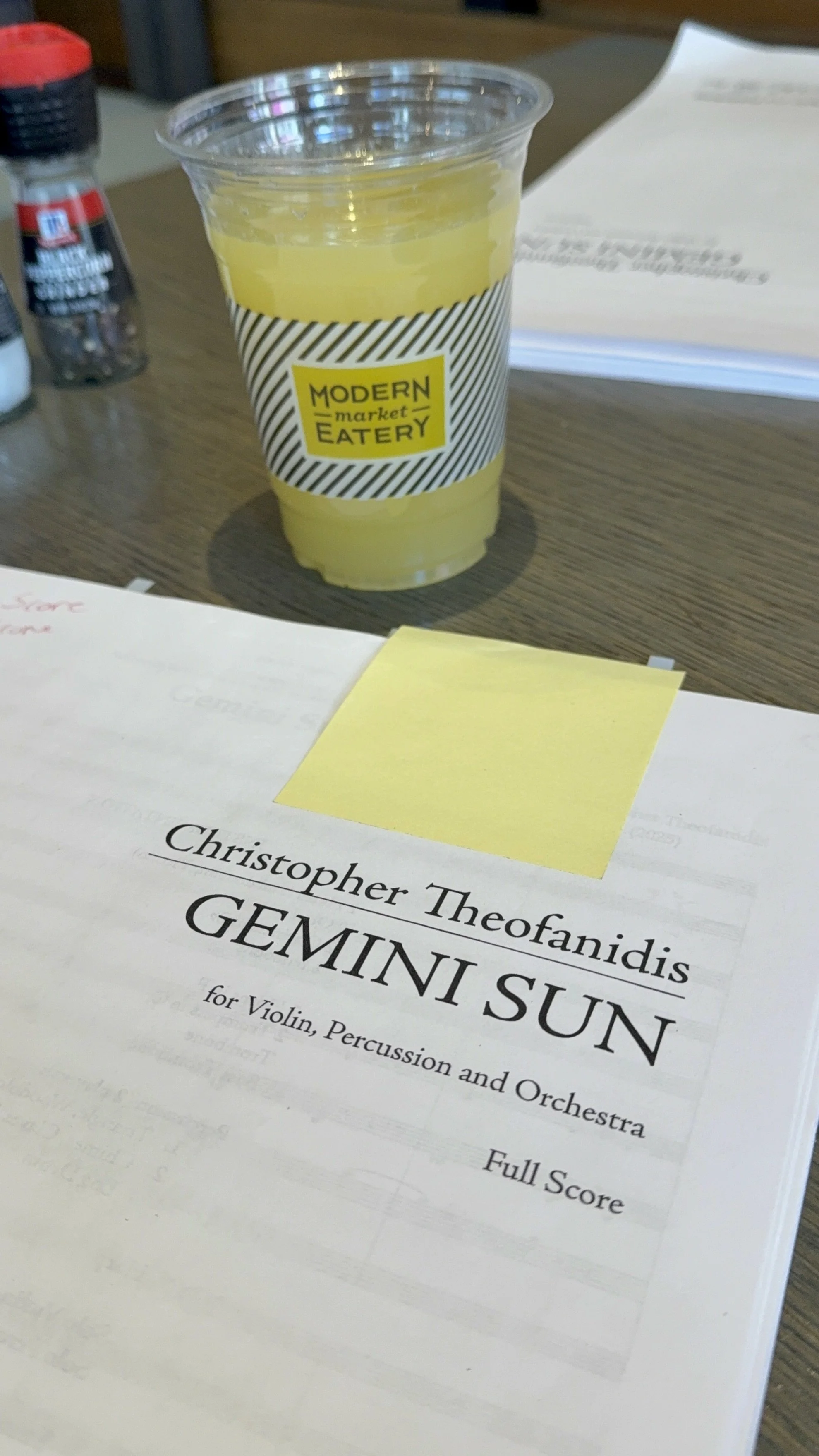
At the center of this program was the world premiere of Christopher Theofanidis’s Gemini Sun, a double concerto for violin, percussion, and orchestra. The work was written for violinist Yumi Hwang-Williams and percussionist Svet Stoyanov, and it was especially compelling to observe because it lives at the intersection of virtuosity, color, and collaboration.
The pairing itself is unusual. Violin and percussion do not naturally occupy the same expressive terrain. The violin is often associated with sustained line, lyrical continuity, and vocal intensity. Percussion, depending on the instrument, often speaks through attack, resonance, rhythm, and gesture. What fascinated me about Gemini Sun was how the piece seems to embrace that tension rather than hide it.
Theofanidis describes the image of Gemini, or twins, as central to the work. That feels apt. The concerto is not simply a solo violin with percussion accompaniment, nor is it a novelty pairing built around contrast alone. It is a study in relationship: two solo presences speaking in different languages, learning how to reflect, challenge, echo, and transform one another across the course of the piece.
I found that especially interesting as a conductor because so much of conducting is about managing relationships: soloist to orchestra, melody to harmony, foreground to background, pulse to rubato, continuity to disruption. A piece like this makes those relational tensions visible and audible in a very direct way.
A Closer Look at Gemini Sun
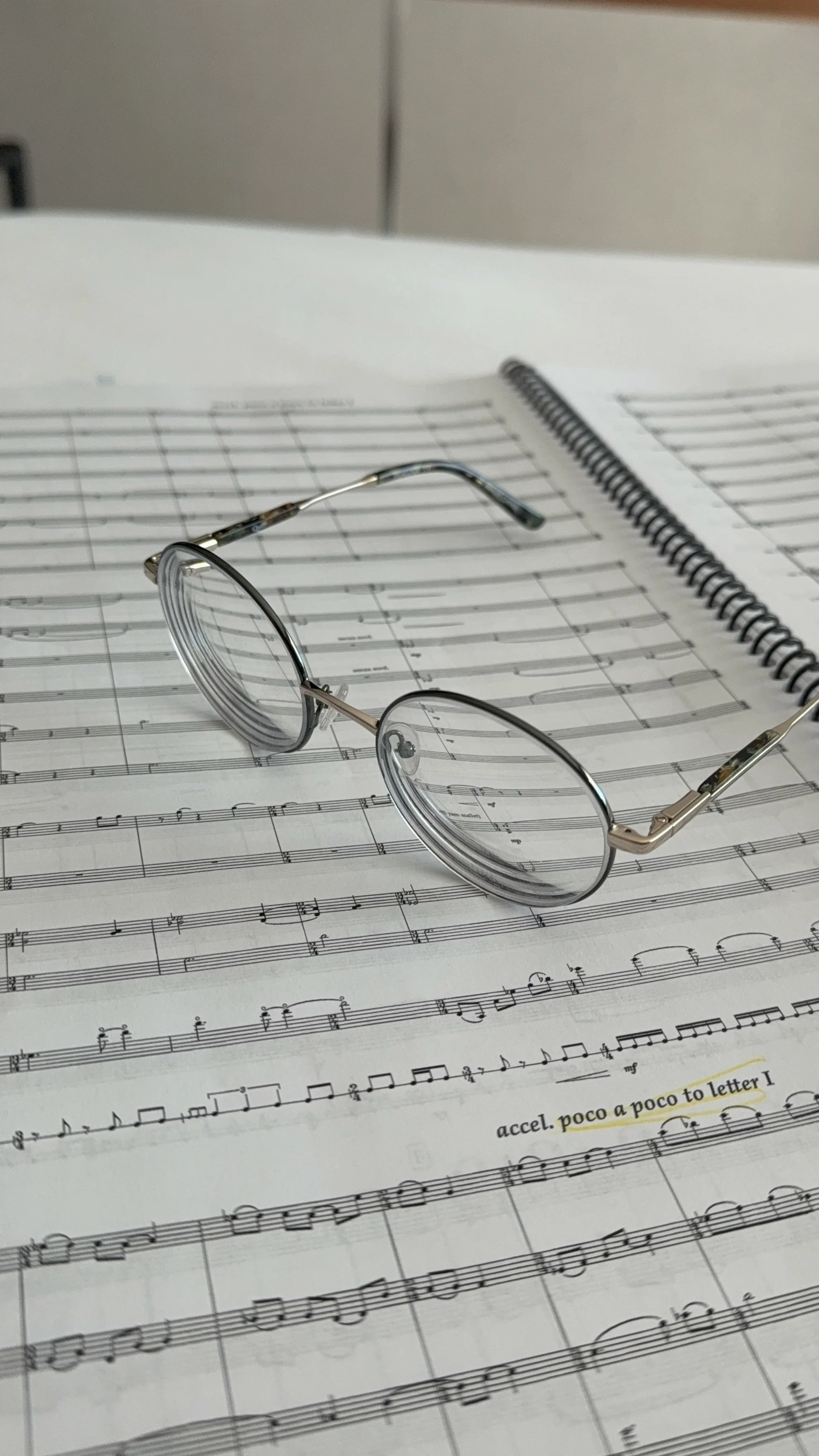
The first movement, Con brio, immediately establishes a sense of brightness and momentum. The dialogue between violin and percussion feels vivid and alert, with a kind of quicksilver energy. There is something exhilarating about hearing the orchestra support that exchange without overpowering it. The texture stays alive, but there is clarity within the motion.
The second movement, Easy, interested me for a different reason. It leans into a more sustained and luminous sound world, particularly through the use of vibraphone. That creates a striking bridge between percussion and violin because the vibraphone can extend resonance in a way that feels unusually sympathetic to bowed string sound. Instead of hearing the soloists as opposites, you begin to hear them meeting in shared color.
The third movement, Cantabile, carries a particularly personal dimension. The work draws on a traditional Bulgarian folk tune, Kaval Sviri, alongside Theofanidis’s own material, and the percussion writing here centers on the Tappan, a Bulgarian frame drum, as a nod to Svet Stoyanov’s heritage. That choice is meaningful. It brings a different historical and cultural weight into the piece, but in a way that feels structural rather than decorative. It is not there as surface flavor. It changes the character of the movement from the inside.
The final movement, Presto, returns with rhythmic drive and a more playful, competitive energy. By that point, the relationship between the soloists feels fully activated. The dialogue is sharper, bolder, and more extroverted. It becomes not just conversation, but contest and dance.
What I appreciated most about the piece overall is that it did not treat the unusual solo pairing as a gimmick. It treated it as a compositional problem worth solving. That is far more interesting.
Working in the Orbit of a Living Composer
There is something deeply valuable about hearing a new orchestral work while also being aware of the composer as a present, living artist in the room.
Classical music can easily fall into the habit of treating scores as fixed monuments. We revere the repertoire, and rightly so, but there is a different kind of energy in a premiere. The music has not yet settled into tradition. No one is leaning on inherited consensus. The piece is still becoming itself in public.
That is exciting.
As a conductor, I find there is a special humility required when working with contemporary music. You cannot rely on performance mythology in quite the same way. You have to meet the score more directly. You have to ask what it is doing, how it is built, what kind of listening it requires, and how the orchestra can make its argument convincingly. You are not only serving history. You are helping shape how history might remember the piece.
Being close to that process, even in an observational role, was a reminder that classical music is not only an archive. It is still alive.
A New Friendship in the Middle of It All
One of the loveliest parts of the week was meeting a new friend, Gemma. She is a musician, composer, and artist, and meeting her felt special almost immediately.
We were roomed together in the hotel while we were with the Colorado Symphony, and there was something unexpectedly sweet about becoming acquainted in that kind of shared temporary space. It felt intimate in the way artistic projects sometimes do: people arrive from different lives, different disciplines, different corners of ambition, and for a short time everyone is living inside the same creative weather.
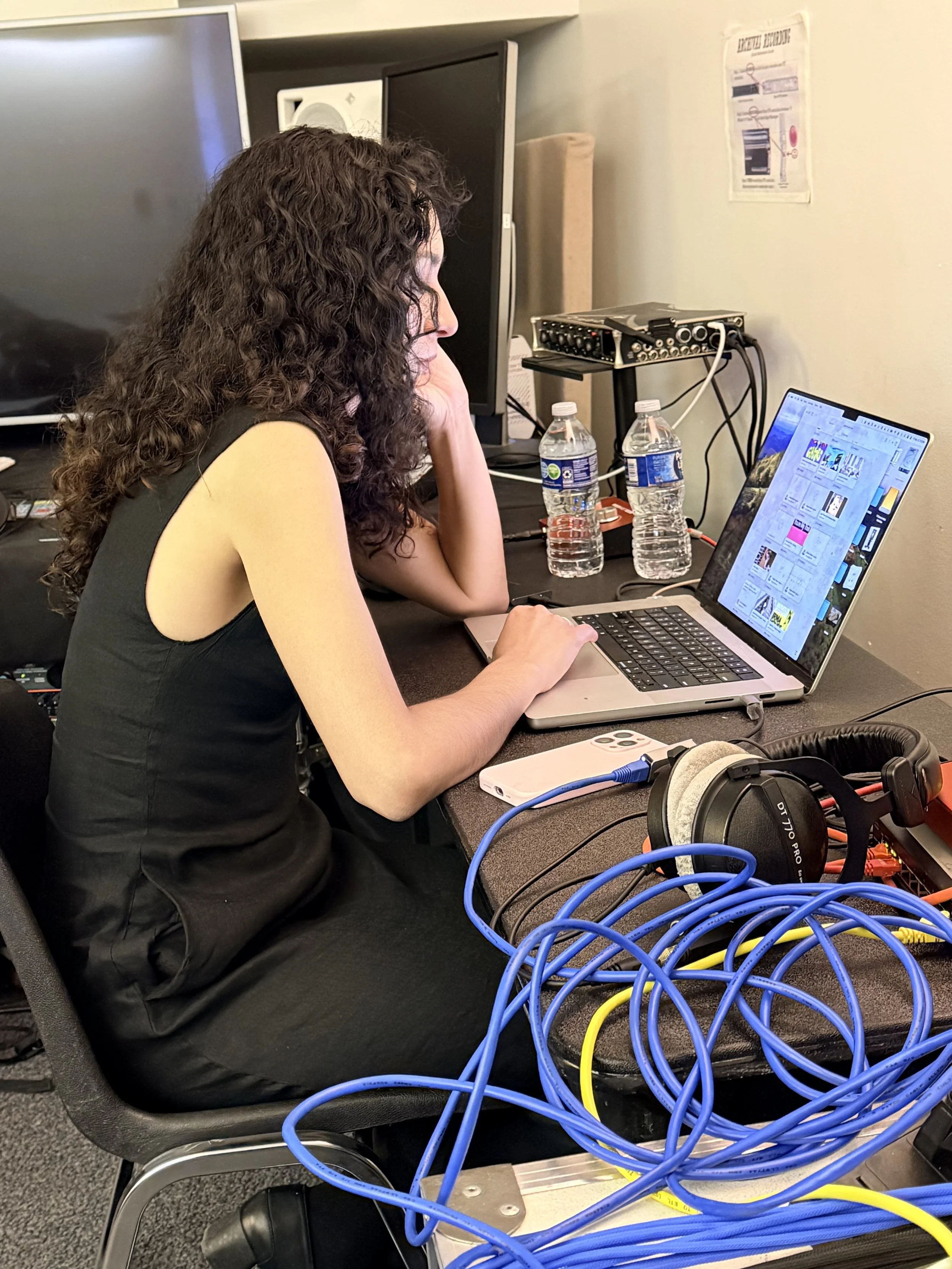
Gemma preparing for another great recording day
There was very much a women-supporting-women feeling to our friendship, which I cherished. We encouraged each other in our artist dreams and goals, and that kind of mutual encouragement can be more powerful than people realize. Creative life can be lonely. It can be uncertain. It can ask for a tremendous amount of faith. So meeting another woman who is building, composing, imagining, and striving with sincerity felt deeply meaningful to me.
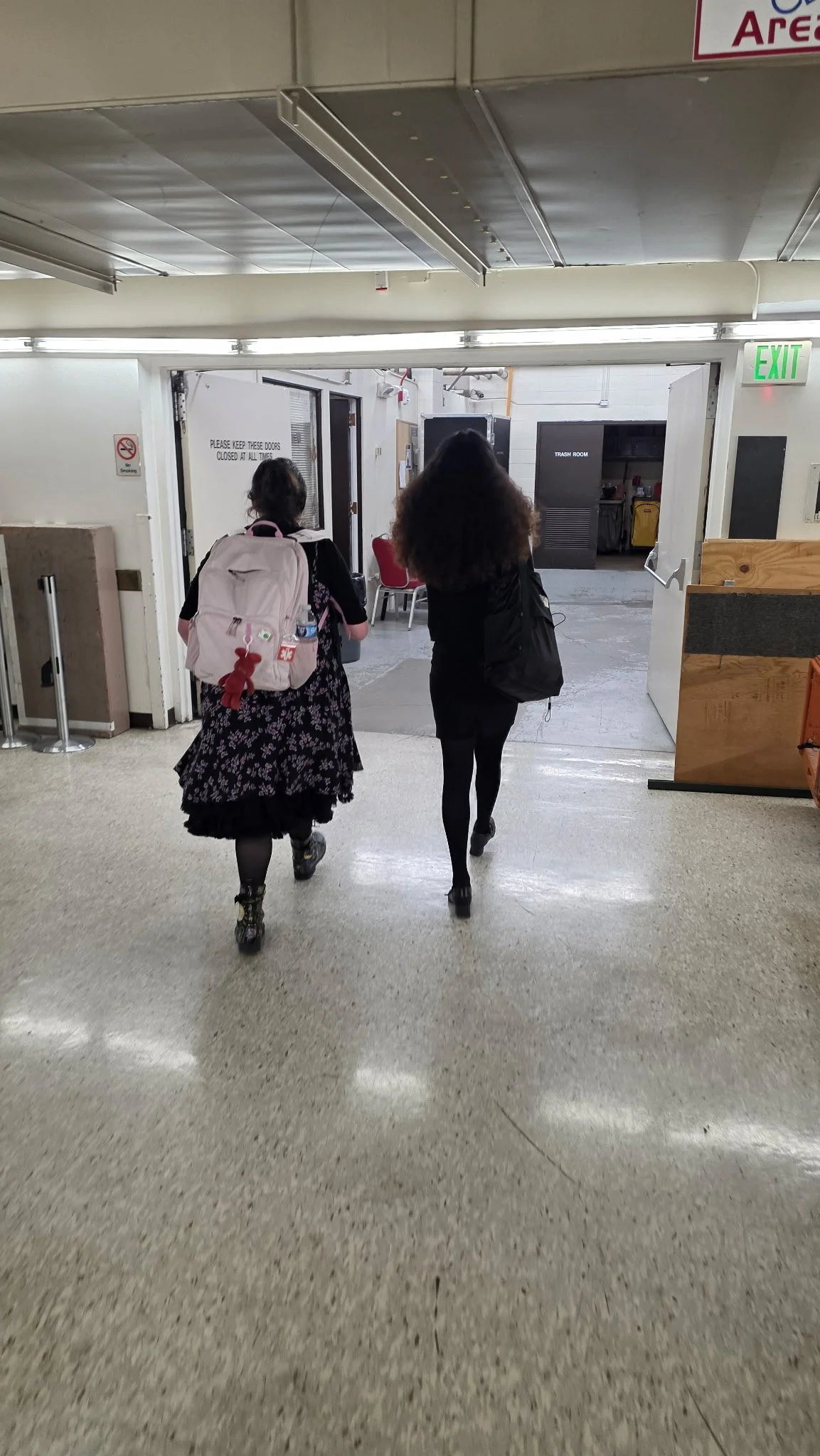
Going home after a long day
I loved learning about Gemma’s projects, hearing about her artistic world, and listening to her music. Those conversations became part of the experience too. They reminded me that art is not only made in rehearsal halls and performance spaces. It is also made in hotel rooms, in late conversations, in shared excitement, in the quiet recognition of one artist seeing another clearly.
One of my favorite small memories from that time was getting her to watch the anime Nana with me during our free time. There was something almost funny and tender about that, because Nana is about two young women who meet on a train and become connected by chance and circumstance. Watching it together felt strangely familiar to our own situation. We had met as roommates because of this project, brought together by music and temporary proximity, and suddenly there we were sharing a story about two women whose lives cross in a meaningful way.
That parallel stayed with me. Sometimes the emotional shape of an experience reveals itself in unexpected little mirrors like that.
Learn more about Gemma and her work:
Website: https://gemmacastro.com
Instagram:https://www.instagram.com/gemmacastro__/
The Larger Program: Verdi, Theofanidis, and Prokofiev
I also loved the architecture of the program itself.
Verdi’s La forza del destino Overture opened the concert with dramatic compression: fate, urgency, lyricism, and operatic force distilled into a compact orchestral statement. It is a work that knows how to seize attention immediately. Beginning with Verdi set the emotional stakes high from the start.
Then came Theofanidis’s Gemini Sun, which brought the audience into a contemporary sound world without abandoning communicative clarity. It functioned almost like a hinge between past and present: a new work conscious of orchestral tradition, but unafraid to speak in its own voice.
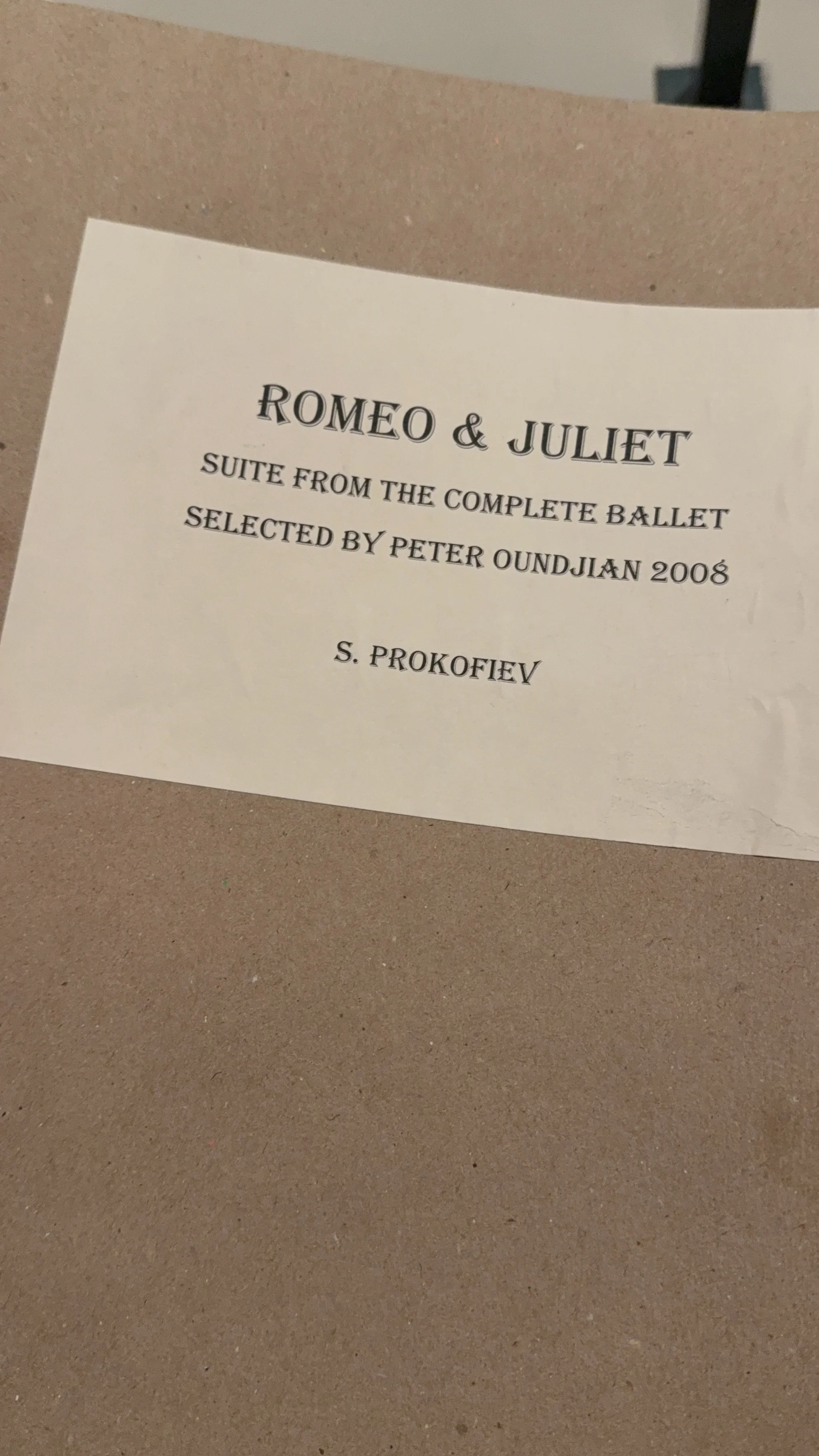
The second half moved into Prokofiev’s Romeo and Juliet, in a suite arranged by Peter Oundjian that followed the dramatic arc of the ballet closely enough to feel almost like a musical synopsis of the story. That made for an especially satisfying close to the evening. Prokofiev gives you theatrical character, atmosphere, tension, brutality, tenderness, and catastrophe in bold orchestral strokes. After the world premiere, it was powerful to hear a twentieth-century master of orchestral drama take over the room.
From a programming standpoint, I thought the concert was beautifully balanced: Verdi for force and immediacy, Theofanidis for invention and living dialogue, Prokofiev for narrative sweep and emotional scale.
The Backstage Moment I Will Never Forget
Of course, no account of this experience would be complete without one of the strangest and funniest moments of the weekend.
During the final Sunday performance, I was backstage in the control room with the composer, the assistant conductor, and two audio engineers. The soloists were backstage preparing to go on for the concerto. Everything felt focused, calm, and ready.
And then the fire alarm went off.
Suddenly the alarms and lights were going through the hall while the orchestra was still onstage, and we were watching the audience on the live CCTV feed as the entire situation unfolded in real time. There was no actual danger, thankfully, so what followed was not panic so much as a bizarre blend of preparedness and disbelief. Everyone backstage got up and prepared to evacuate, but there was also this undercurrent of laughter because it was somehow both terrible timing and the best possible bad timing.
It had not interrupted the actual performance. It went off between pieces.
That detail made the whole thing feel surreal. It was a perfect reminder that no matter how polished, disciplined, and elevated an orchestral event may be, live performance remains gloriously vulnerable to reality. Alarms go off. Systems fail. Timing becomes absurd. Human beings improvise.
And somehow, that too becomes part of the story of the performance.
What I Took Away From the Experience
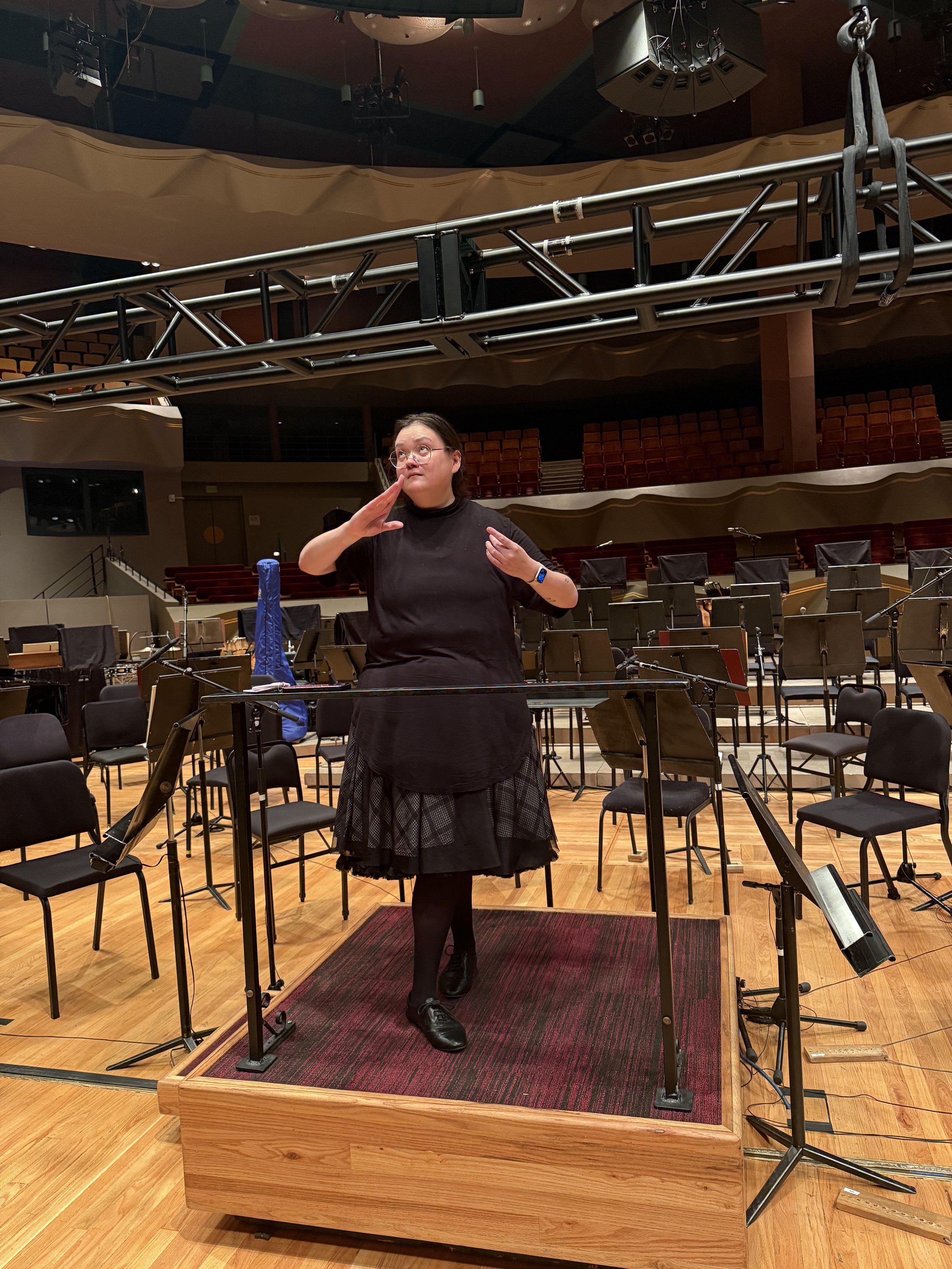
“One day….” Photo by Gemma
What stayed with me most after the weekend was not just admiration for the Colorado Symphony, or fascination with the new concerto, or even delight in the absurdity of the fire alarm story. It was a renewed sense of how many kinds of intelligence converge inside orchestral work.
There is the intelligence of the score.
The intelligence of the conductor.
The intelligence of the players.
The intelligence of the soloists.
The intelligence of the composer.
The intelligence of the recording team.
And there is also the intelligence of friendship, encouragement, and artistic community: the conversations that strengthen your resolve, the people who reflect your own creative hopes back to you, the brief but meaningful connections that remind you you are not building your artistic life alone.
Each one listens differently. Each one is responsible for a different layer of the final result. And when all of them align, the audience hears something that feels singular, even though it is built from countless acts of attention.
As a conductor, this experience reminded me that studying music deeply means studying it from multiple angles. It is not enough to think only about gesture or interpretation in the abstract. It matters how the score functions under pressure. It matters how sound is balanced in space. It matters how a phrase survives repetition. It matters how a new work enters the world.
Most of all, it reminded me that orchestral music is not only about grandeur. It is also about care. Care in preparation. Care in listening. Care in collaboration. Care in deciding what deserves another take and what already carries the truth of the moment.
That is what I was lucky enough to witness from the control room.
And I left not only with a deeper respect for orchestral recording and contemporary music, but with gratitude for the people I met along the way, especially the artists whose passion, generosity, and encouragement made the entire experience feel even more alive.